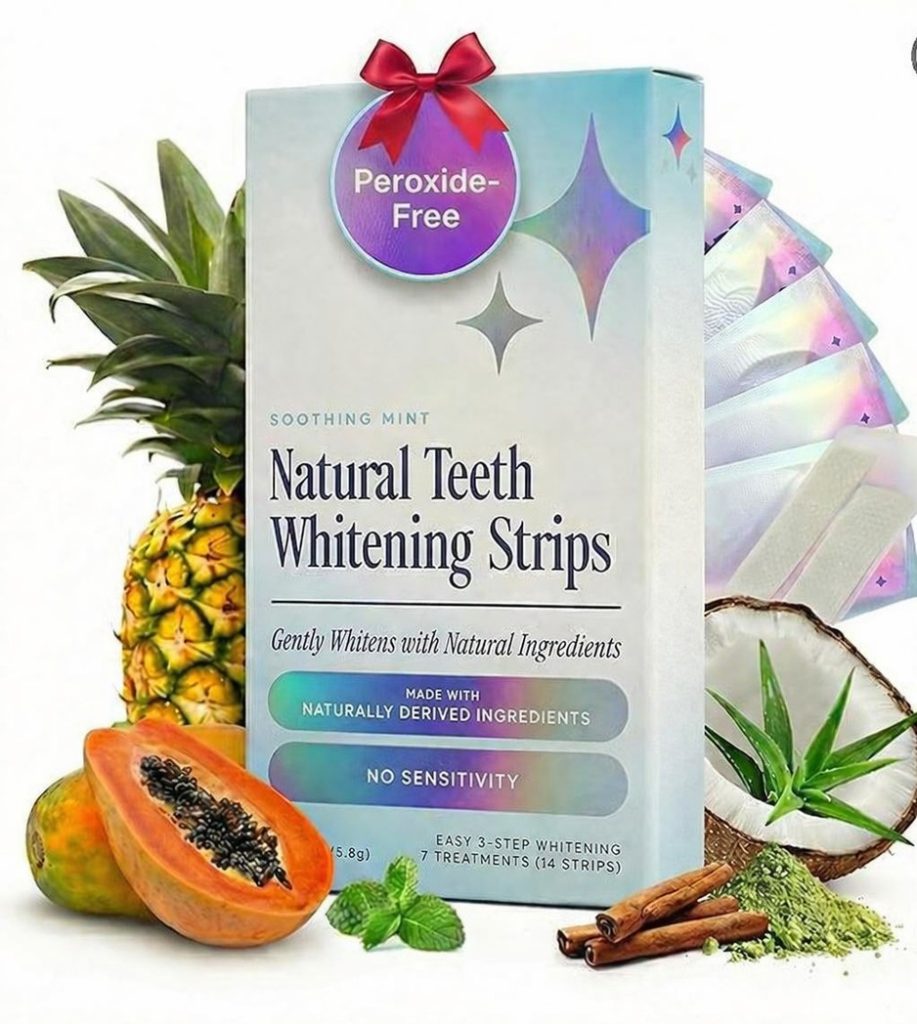
Teeth whitening strips are thin plastic strips coated with a peroxide-based gel (usually hydrogen peroxide) that stick to your teeth and remove stains from the enamel surface.
They are one of the most popular at-home whitening methods because they are easy, affordable, and give visible results in days to weeks.
✅ Benefits of Teeth Whitening Strips
Effective stain removal
They can remove yellow stains caused by tea, coffee, smoking, etc., even below the enamel surface.
Affordable compared to dental treatment
Much cheaper than professional whitening done by dentists.
Easy to use at home
Just apply strips for 20–60 minutes daily.
Quick results
Some users see improvement within a few days; full results in 1–2 weeks.
Widely available
Easily available online and in stores, especially brands like Crest.
👍 Pros
✔ Convenient (no dentist visit needed)
✔ Visible whitening results
✔ Non-invasive (no drilling or injections)
✔ Safer than many DIY hacks (like charcoal)
✔ Can be used anytime (morning or night)
❌ Cons
❌ Tooth sensitivity (common side effect)
Some users feel “sharp pain” or discomfort after use.
❌ Gum irritation
If strips touch gums, they may cause irritation.
❌ Uneven whitening
Crooked teeth or gaps may not whiten evenly.
❌ Temporary results
Teeth can stain again with coffee, tea, smoking, etc.
❌ Not effective on dental work
They don’t whiten crowns, veneers, or fillings.
⚖️ Pros vs Cons (Quick Summary)
Pros Cons
Easy & convenient Can cause sensitivity
Affordable Results not permanent
Works at home May irritate gums
Quick visible results Not for crowns/fillings
🧾 Conclusion
Teeth whitening strips are a good and practical option if you want a brighter smile without spending a lot of money. They work best for mild to moderate stains and when used correctly.
However, they are not perfect—you may experience sensitivity, and results are temporary. For long-term or severe discoloration, professional dental whitening is better